
Table of Contents
New vs Used Shipping Containers: Which Should You Buy?
Buying a shipping container is a practical investment for storage, transport, construction, agriculture, business inventory and custom conversion projects. One of the first decisions you will need to make is whether to buy a new shipping container or a used shipping container.
At first, the choice seems straightforward: new containers cost more, while used containers cost less. However, the real decision involves much more than price. Container condition, intended use, appearance, expected lifespan, delivery requirements, structural integrity and certification can all affect which option makes sense for your project.
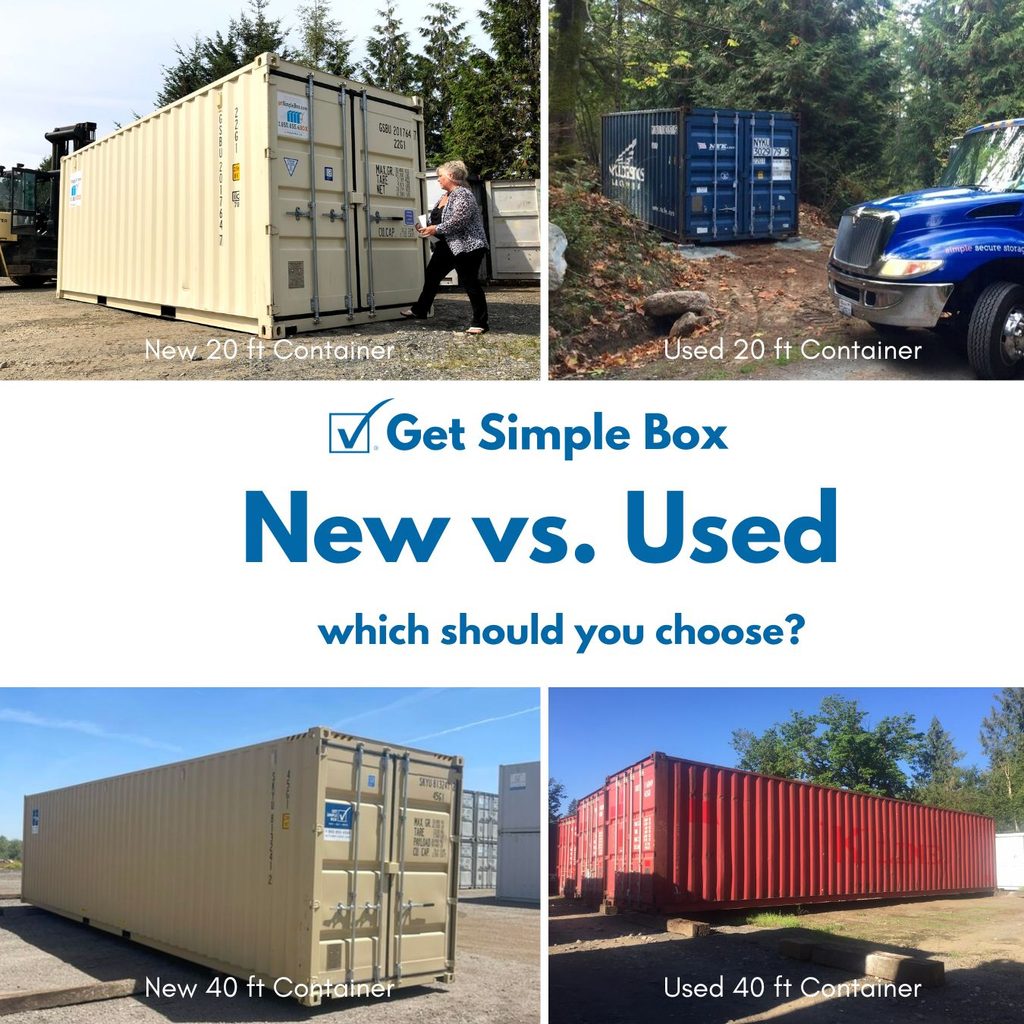
In the shipping container industry, the term “new” usually refers to a one-trip container. These containers are manufactured overseas, loaded with cargo for a single voyage and then sold in the destination market. Used containers, on the other hand, have already spent time in shipping service and normally show varying degrees of wear.
This guide explains the differences between new and used shipping containers and the factors you should consider before buying.
What Is a New Shipping Container?
When suppliers advertise a container as “new,” they are usually referring to a one-trip shipping container rather than a container that has never been transported.
A one-trip container is manufactured at a container factory, loaded with cargo and transported to its destination. After that first trip, it can be sold for storage, construction, modification or other applications.
Because it has had very limited use, a one-trip container normally has:
- Clean interior walls
- Relatively fresh factory paint
- Minimal surface rust
- Good door seals
- Clean flooring
- Limited dents and scratches
- Fully functioning locking mechanisms
- Minimal previous repairs
Minor scuffs or handling marks can still occur during manufacturing, loading, unloading and transportation.
For buyers looking for a clean starting point, one-trip containers provide a condition much closer to factory-new than older used units.
What Is a Used Shipping Container?
A used shipping container has already spent part of its working life transporting cargo.
Depending on age and condition, used containers can range from relatively clean units with minor cosmetic wear to heavily weathered containers requiring repairs.
Typical signs of use include:
- Faded paint
- Surface rust
- Dents
- Scratches
- Patched panels
- Floor wear
- Repainted areas
- Door seal wear
- Previous repairs
However, cosmetic wear does not automatically mean that a container is unsuitable.
The important distinction is between cosmetic damage and structural damage.
A container may have dents and faded paint while remaining completely suitable for storage. Conversely, a container that looks acceptable externally could have problems with its floor, roof, door frame or structural components.
That is why the condition of the specific container matters more than simply whether it is labelled “used.”
New vs Used Shipping Containers: At a Glance
| Feature | New / One-Trip | Used |
|---|---|---|
| Appearance | Generally excellent | Varies with condition |
| Surface rust | Minimal | May be present |
| Dents | Few | Common depending on age |
| Floor | Usually very clean | May show wear |
| Door seals | Generally newer | May show wear |
| Previous repairs | Very limited | Possible |
| Purchase price | Higher | Lower |
| Customisation | Excellent starting point | Depends on condition |
| Storage | Excellent | Excellent when properly graded |
| Appearance-sensitive projects | Well suited | Depends on grade |
| Budget projects | Higher upfront cost | Often more economical |
The actual condition and price will vary by market, container size, grade and supplier, so buyers should compare specific units rather than relying solely on general price assumptions.
The Main Advantage of Buying New
The biggest advantage of a one-trip container is condition.
If you want a container that looks clean and requires minimal preparation, paying more for a one-trip unit can make sense.
The cleaner starting point can be particularly useful when the container will be:
- Installed at a commercial property
- Visible from the street
- Used for a customer-facing business
- Converted into an office
- Converted into a workshop
- Used for accommodation
- Modified into a retail space
- Repainted or fitted out
- Kept for many years
A new container also reduces the likelihood that you will immediately need to deal with extensive rust treatment, floor repairs or replacement door seals.
That does not mean every new container is perfect. It is still important to inspect the actual unit and confirm its specification before purchasing.
The Main Advantage of Buying Used
The biggest reason people choose used shipping containers is value.
A structurally sound used container can provide secure, weather-resistant storage without requiring the buyer to pay for the appearance and low wear of a one-trip unit.
For applications such as:
- Building-site storage
- Farm storage
- Equipment storage
- Tool storage
- Machinery storage
- Commercial inventory
- Temporary storage
- Agricultural applications
cosmetic imperfections may not matter very much.
If the container is structurally sound, has a good floor, functioning doors and adequate weather protection, a used container can be a practical solution.
Recent industry buying guides consistently distinguish between cosmetic wear and functional condition when evaluating used containers.
Used Container Grades Matter
“Used” is not a single condition category.
Suppliers may use terms such as:
Cargo Worthy
A cargo-worthy container is intended to meet structural requirements for cargo transportation. If you need the container for international shipping, confirm the specific certification and documentation rather than relying only on the phrase “cargo worthy.”
Wind and Watertight
Wind-and-watertight containers are commonly sold for storage applications. They may have cosmetic wear, dents and surface rust while still providing protection from normal weather.
Refurbished
A refurbished container may be an older unit that has been repaired, treated and/or repainted before being offered for sale.
As-Is
An as-is container is sold in its existing condition. These units can be cheaper but require considerably more care when assessing the actual condition.
Different suppliers use grading terminology differently, so always ask what the supplier’s particular grade means and what condition is guaranteed.
When Should You Buy a New Container?
A new one-trip container can be worth considering when appearance and starting condition are important.
1. You Are Planning a Container Conversion
If you are building a container office, workshop, retail space or accommodation, starting with a cleaner container can simplify the project.
A relatively clean interior can reduce preparation work before insulation, lining, electrical installation and other modifications.
However, a good-quality used container can also be suitable for many conversion projects. The important factors are the specific container’s floor, roof, walls, frame and previous history.
2. Appearance Matters
If the container will be visible to customers, neighbours or visitors, a newer container may be preferable.
For example, a business may want its storage container to look clean and professional rather than heavily weathered.
The difference between fresh factory paint and heavily faded paint can have a noticeable impact on the appearance of a property.
3. You Want Minimal Initial Maintenance
One-trip containers generally require less immediate cosmetic maintenance than older units.
You are less likely to encounter extensive surface corrosion, heavily worn floors or aging seals.
This can be useful when you want to place the container on site and begin using it immediately.
4. You Need Multiple Matching Containers
Businesses sometimes require several containers with similar appearance and condition.
Buying newer containers can make it easier to achieve a consistent appearance across a storage area or commercial site, although availability will depend on the supplier and local market.
When Should You Buy a Used Container?
A used container can make sense when practical function is more important than appearance.
1. You Need Affordable Storage
If your primary objective is to keep equipment, tools, machinery or inventory dry and secure, you may not need a one-trip container.
A suitable used container can provide substantial storage capacity without the higher purchase price associated with newer stock.
2. The Container Will Be Used on a Worksite
Construction sites can be hard on equipment.
Containers used to store building materials, tools and machinery may quickly acquire scratches and dents anyway.
In such situations, paying a premium for a nearly new exterior may provide limited practical benefit.
3. Appearance Is Not Important
If the container is positioned behind a warehouse, on a farm or in another area where appearance is secondary, a used unit can be perfectly practical.
The money saved can potentially be allocated to shelving, lighting, security, ventilation, electrical work or other improvements.
What About Long-Term Use?
A common misconception is that buying a new container automatically guarantees a much longer usable life.
In reality, maintenance, climate, corrosion exposure, usage and starting condition all matter.
A well-maintained used container can continue providing useful service for many years. Likewise, a new container can deteriorate prematurely if it is placed directly on poor ground, exposed to standing water or neglected in a highly corrosive environment.
When comparing new and used units, look beyond age.
Consider:
- Steel condition
- Rust
- Roof condition
- Floor condition
- Door operation
- Drainage
- Paint condition
- Location
- Maintenance requirements
The container’s expected service life should be considered alongside the conditions in which it will actually be used.
What About International Shipping?
If the container will be used for international cargo transportation, certification and structural condition become particularly important.
The International Maritime Organization’s Convention for Safe Containers (CSC) establishes internationally recognized requirements covering the testing, inspection, approval and maintenance of containers used in international transport. Approved containers carry a Safety Approval Plate with relevant technical information.
Therefore, if you intend to purchase a container for international shipping, ask the supplier about:
- CSC approval
- Safety Approval Plate
- Examination requirements
- Maximum gross weight
- Structural condition
- Required documentation
- Whether the specific container remains suitable for your intended transport
Do not assume that a container described as “shipping grade” automatically meets every requirement for your particular route or carrier.
New vs Used: Consider the Total Cost
The purchase price is only part of the equation.
Before buying, calculate the total project cost.
This can include:
- Container purchase
- Delivery
- Crane or placement costs
- Ground preparation
- Repairs
- Rust treatment
- Repainting
- Floor repairs
- Door seal replacement
- Locks and security equipment
- Electrical installation
- Insulation
- Ventilation
- Shelving
- Custom modifications
For example, a heavily discounted used container may not remain the cheaper option if it requires substantial repairs before it can be used.
Conversely, paying extra for a one-trip container may be unnecessary if you only need basic storage.
The best comparison is therefore not simply:
New price vs used price
but:
Total cost to get the container into the condition you actually need.
Inspect a Used Container Before Buying
If you are considering a used container, inspect the actual unit whenever possible.
Pay particular attention to:
Roof
Look for holes, serious corrosion, major dents and previous repairs.
Walls
Check for rust-through, damaged panels and structural distortion.
Doors
Open and close the doors. Check the hinges, locking bars, frame and seals.
Floor
Walk across the entire floor and look for soft areas, rot, cracks and repairs.
Corner Posts and Castings
Check for significant damage or deformation.
Interior
Close the doors and look for daylight entering through holes or damaged seals.
Identification
Verify the container number and any relevant documentation.
If you are buying remotely, request recent photographs of the specific container, including its interior, exterior, doors, roof and floor.
Don’t Confuse Cosmetic Damage With Structural Damage
This is one of the most important lessons when buying used.
A dent in a side panel may have little practical impact.
A heavily corroded structural frame can be a very different matter.
Similarly:
Faded paint ≠ structural failure
Surface rust ≠ rust-through
Minor dents ≠ serious frame damage
Floor staining ≠ rotten flooring
The actual severity of the problem should be assessed before purchasing.
If you aren’t comfortable inspecting the container yourself, consider having someone experienced inspect it on your behalf.
What About Refurbished Containers?
There is also a middle ground between buying a heavily used container and buying a one-trip container.
A refurbished container may have been:
- Repaired
- Rust treated
- Repainted
- Fitted with replacement seals
- Given floor repairs
- Cleaned internally
This can provide a cleaner appearance while potentially costing less than a one-trip unit.
However, refurbishment quality varies.
Ask exactly what work was carried out and whether structural repairs were required before the container was refurbished.
New vs Used for Different Applications
| Application | Common consideration |
|---|---|
| Basic home storage | Used may be suitable |
| Farm storage | Used often considered |
| Construction storage | Used can be practical |
| Machinery storage | Condition matters more than appearance |
| Commercial inventory | Used or new depending on presentation |
| Customer-facing site | New/one-trip may be preferable |
| Workshop conversion | New or high-quality used |
| Office conversion | New/one-trip often attractive |
| Container accommodation | Condition and previous history are especially important |
| International cargo | Verify applicable CSC requirements |
| Temporary storage | Used may provide sufficient value |
| Long-term visible installation | New or refurbished may be worth considering |
These are starting points rather than universal rules. The appropriate container depends on the project and the condition of the individual unit.
Questions to Ask Your Container Supplier
Before you place an order, ask:
- Is this container one-trip or used?
- What is the exact condition grade?
- Is it wind and watertight?
- Are there any holes or rust-through areas?
- Has the floor been repaired?
- Are the original door seals intact?
- Has the container had structural repairs?
- Can I see photographs of the actual container?
- Is it suitable for my intended application?
- Does it have CSC approval if I require it for international shipping?
- What does the quoted price include?
- Is delivery included?
- How will the container be unloaded?
- Is there a warranty or condition guarantee?
- What happens if the delivered container differs materially from the agreed specification?
Getting clear answers before paying can prevent many problems later.
How to Decide Between New and Used
A simple way to approach the decision is to start with your priorities.
Choose a one-trip container if:
- You want a clean appearance.
- You are building a high-quality conversion.
- The container will be visible to customers.
- You want minimal initial repairs.
- You want a newer starting condition.
- The additional upfront cost fits your budget.
Consider a used container if:
- Your main objective is affordable storage.
- Cosmetic imperfections don’t matter.
- The container will be used on a construction site.
- It will be positioned somewhere out of sight.
- You are comfortable with normal signs of use.
- The specific container has good structural and weatherproof condition.
Consider refurbished if:
- You want a better appearance than a typical used container.
- You want to control costs.
- You are comfortable buying a previously used unit.
- The supplier can explain and document the refurbishment work.
Final Thoughts
There is no universal answer to whether a new or used shipping container is the right purchase.
A one-trip container offers a cleaner starting point, newer components and generally better cosmetic condition. It can be particularly useful for conversions, commercial installations and projects where appearance matters.
A used container can provide excellent practical value when your primary requirements are secure, weather-resistant storage and a sound structure. Normal dents, faded paint and surface rust do not automatically make a used container unsuitable.
The most important thing is to match the container’s condition and specification to its intended use.
Before buying, compare the complete delivered cost, inspect the actual container where possible, understand the condition grade, check the floor and roof, test the doors and seals, and verify certification if the container will be used for international transport.
Ultimately, the right purchase isn’t necessarily the newest or cheapest container. It is the container whose condition, specification, price and expected use align with your project.